

East Africa economic growth
A building under construction in Kigali. The East African economies will be boosted by the construction sector in 2016. PHOTO | FILE
Regional economies had predicted a rise in their growth rates, but poor performance by several key sectors saw most of them fail to meet their targets due to inflation, falling commodity prices and weakening currencies.
While the East African economies are expected to pick up slightly this year, the region will continue to perform below its potential, as the main threats to growth are not likely to abate.
In Kenya, despite falling short of the 2015 economic forecast, the economy is forecast to accelerate slightly in 2016, sustained by loose fiscal policy, infrastructure projects and robust private sector consumption.
Ricard Torne, an economist at Focus Economics, said that Kenya’s large fiscal deficit, rising public debt, a weak shilling and tight monetary policy are among the challenges the country is facing this year.
“We are looking at a projected GDP growth of six per cent for 2016, ” said Mr Torne.
The International Monetary Fund has also forecast Kenya’s GDP growth will accelerate to about six per cent in 2016, on strong investment momentum, and a pick-up in tourism.
Uganda’s elections in February, coupled with weak commodity prices, are some of the challenges it faces in 2016.
Already, campaign spending is fuelling inflation and driving down the shilling. In addition to driving up import prices, the weak currency is weighing on consumer and investor confidence. The activity generated by externally funded hydropower and communications projects continues to be one of the few bright spots in the economy.
“While the external sector’s performance will depend on global market developments, the outcome of the upcoming election will have a determining impact on the broader economy in the New Year. We forecast a GDP growth of 5.7 per cent in 2016, ” said Mr Torne.
Tanzania’s economy has also seen a tumultuous 2015, with donor budgetary support being withheld.
In 2016, GDP growth is forecast at 6.8 per cent, with the World Bank’s vice president for Africa Makhtar Diop saying that Ivory Coast, Ethiopia, Rwanda, Mozambique and Tanzania are among the sub-Saharan economies that are still expected to grow robustly, posting seven per cent or more growth per year till 2017.
Tanzania’s economic growth slowed in 2015 due to budgetary deficits, weaker commodity prices — especially gold, copper and diamonds; and a slowdown in the manufacturing, construction and communications sectors.
The IMF in its peer review on Rwanda has forecast that the economy will grow at an average of 6.5 per cent in 2016, compared with the previously anticipated seven per cent.
RELATED VIDEO



RELATED FACTS
-
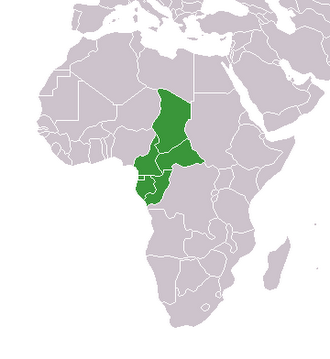 The Central African CFA franc (French: franc CFA or simply franc, ISO 4217 code: XAF) is the currency of six independent states in central Africa, Cameroon, Central African Republic, Chad, Republic of the Congo, Equatorial Guinea and Gabon. CFA stands for...
- Janet Roitman is an American anthropologist known for her research based on fieldwork in Central Africa focusing on "unregulated commerce" along the borders of Cameroon, Nigeria, the Central African Republic, and Chad. Her book Fiscal Disobedience inquires into...
Share this Post
Related posts

South Africa economic growth 2014
The World Bank cut South Africa’s economic growth forecast for this year to 2% as an ongoing strike that’s shut the nation’s…
Read More
Sub Saharan Africa Economic growth
The right kind of interventionism by C.W. | LONDON SUB-SAHARAN Africa (SSA) can be a great place to do business. Mauritius…
Read Morelatest post
-
 Largest economy in Africa August 15, 2026
 -
 African Business Solutions August 5, 2026
 -
 Economy of South Africa 2014 July 26, 2026
 -
 East Africa economic growth July 16, 2026
 -
 Business Coaching South Africa July 6, 2026
 -
 Economic system of Africa June 26, 2026
 -
 North Safety products Africa June 16, 2026
 -
 Countries Near South Africa June 6, 2026
 -
 Political economy of African May 27, 2026